LEARNING WITH OTHERS
DR. CHRISTINA KISHIMOTO | DECEMBER 2023
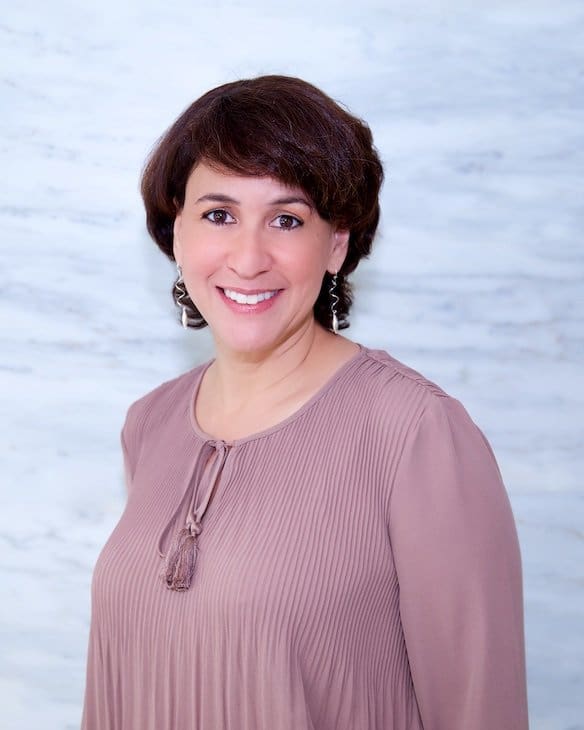 Happy Holidays! It’s been heartwarming to hear so many delightful stories from the Thanksgiving break – tales of joy, relaxation, and cherished moments spent with friends and family. As we approach the winter break, I encourage you to embrace this spirit once more, dedicating this special time to yourself and your loved ones.
It has been a busy semester with many in person events in the professional learning and networking space. These events and gatherings have been good for reconnecting with one another. In fact, I am writing this letter to you from the winter session of the Education Commission of the States in Denver, Colorado, where a compelling conversation about the Kansas design to reduce recidivism through higher education access and workforce skill development for prisoners was the focus of the opening remarks. There are no small issues in education, but if we continue to work together, we can solve differently and yield better outcomes for our communities.
We have another great newsletter for you, with our featured superintendent bringing her voice from rural America. Teresa Chaulk, Superintendent of Lincoln County School District #1 in Wyoming, shares a little of her story. With over 17 years of staying power in her seat, she has a lot of wisdom to share, from the policy issues she is focused on to how she’s thinking about AI and its possible implications for education.
There is also a great story in this issue about brave young ladies from four districts in New York who participated recently in the H.S. Girls Policy Leadership Academy. Whew, they had a lot to share, and as facilitators of that session, we were given a lot to think about. I know that you will enjoy that article, and if you are moved to action and would like to bring this program to your district, give us a call!
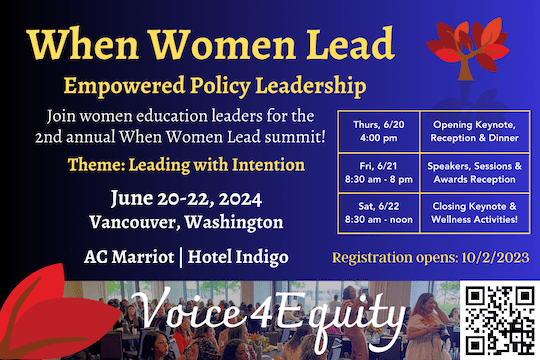
I want to remind you of the When Women Lead education summit in June. Registration is open, and the hotels are filling up! We have a who’s who of educational leaders attending, and we would like for you to give the gift of this opportunity to a woman leader on your team.
In closing, the team at Voice4Equity wishes you a joyous and fun holiday season!
Abrazos!
Christina

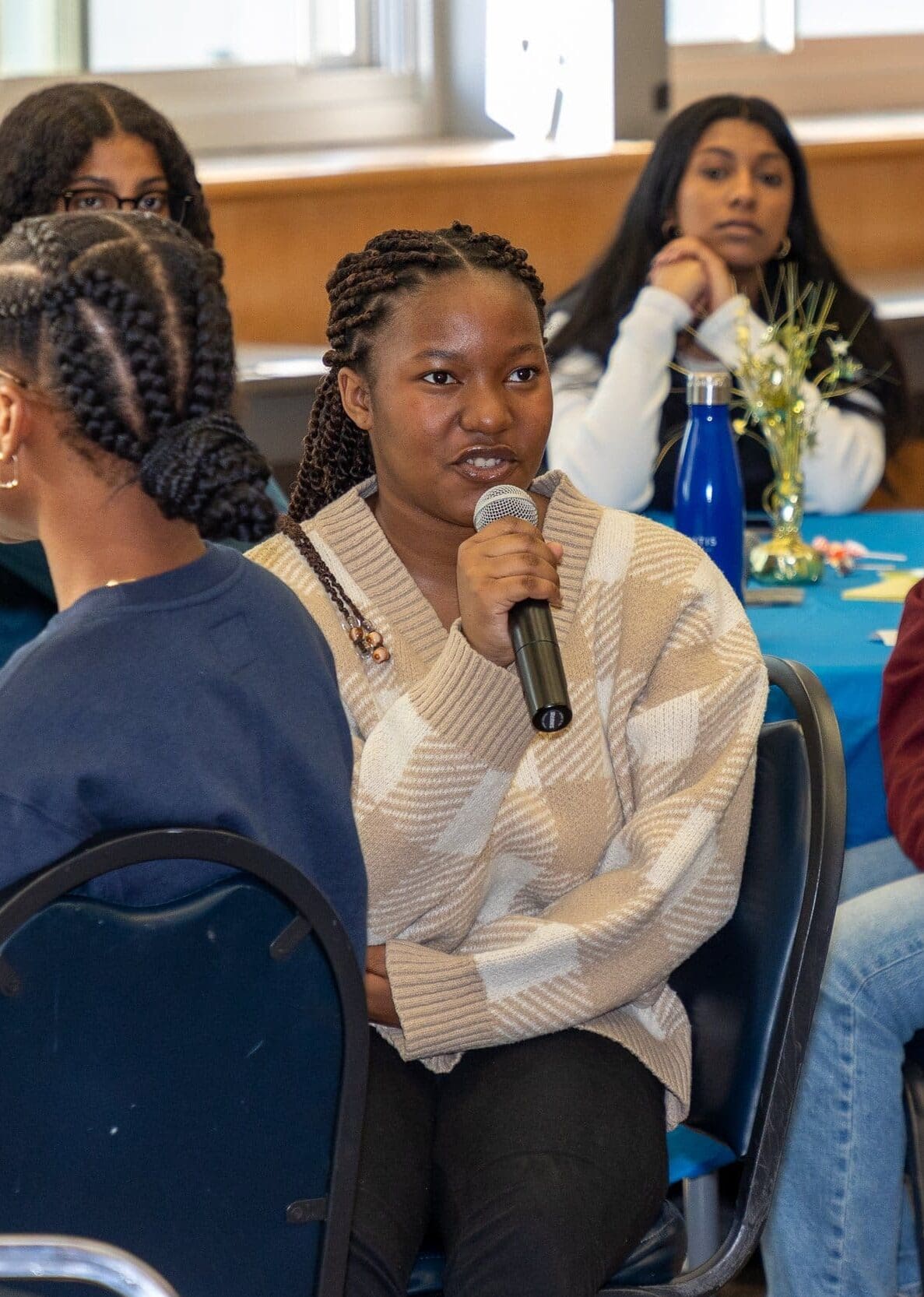 Why are conditions the way they are for young ladies of color in our school systems? In a program offered nationally and held most recently in Long Island and in Brooklyn, New York, teenage girls from across four school districts came together to discuss equity policies affecting them within all of its contextual and historical complexities. What I love about this program – The High School Girls Policy Academy, is that young ladies of Color will always surprise you with how deep they will take you. They have a lot to say about issues that adults often assume they may be too young and too self-engrossed to be thinking about. Underestimate them, though, and they will always prove you wrong. The reality is that when you create a safe space where girls of color can be themselves authentically and you structure the opportunity to center and respect their voices, they will welcome you in. The question, therefore, is not whether they are ready to talk but whether we as decision-makers are ready to listen, to hear the truth in their own words about why things are the way they are for them as young women of color in their high schools and in their communities.
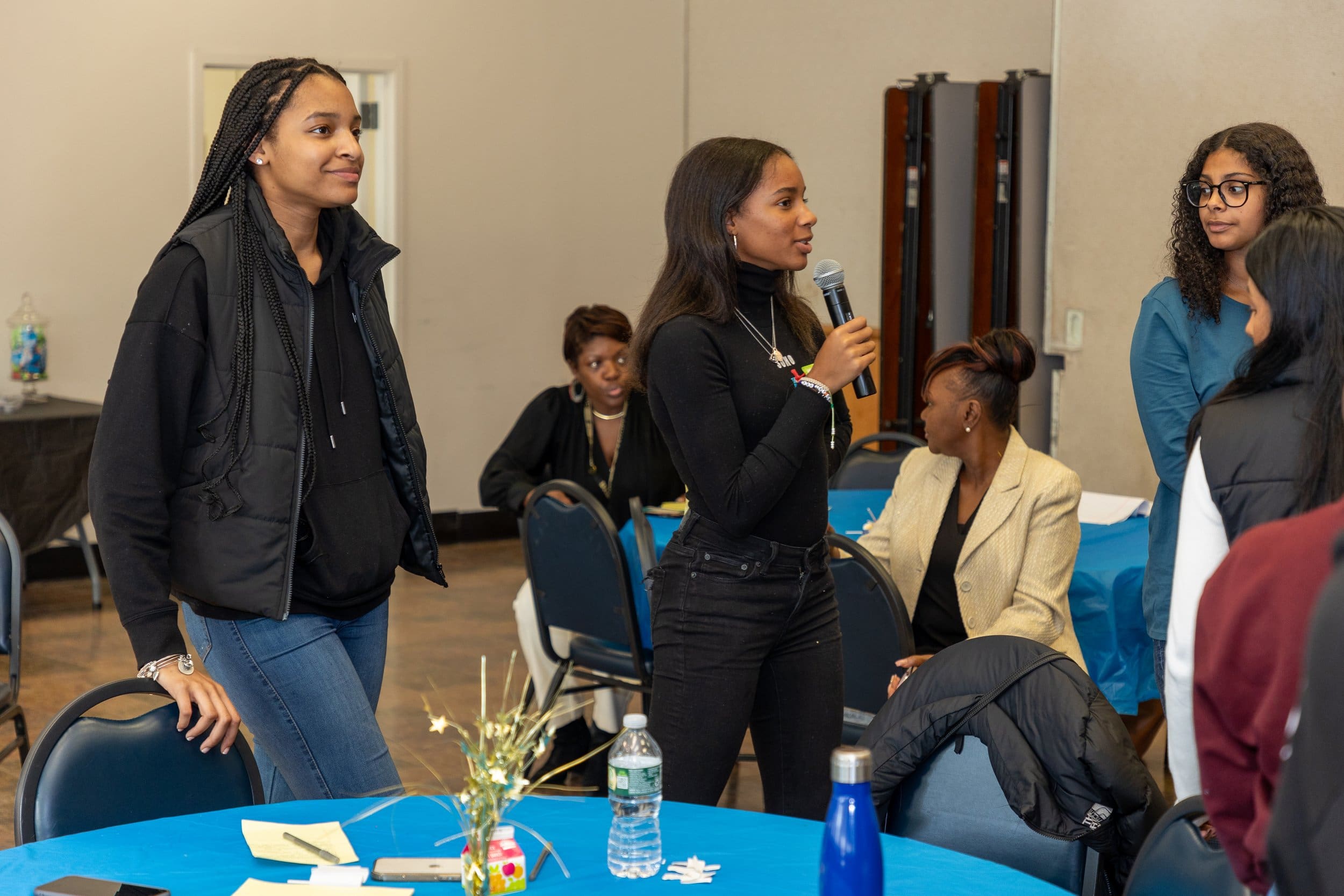 They also talked about the roles of congressional members, governors, and mayors making decisions about topics that matter to them, such as a woman’s right to make her own decisions about her body, controls on curriculum, and what they are allowed to or not allowed to learn about their own culture and history at school, and they discussed the ignored continued inequities on the playing fields with girls sports still undervalued compared to boys sports despite advancements in the law. As we explored what they wanted to talk about within the umbrella of equality and equity, they brought in citations from their AP Black History course, from the national media, to quotes from leaders in their own communities. They demonstrated how deeply they both hear and understand. They were clear that they understood policy in the context of identity – their multiple identities. Whether we structure these opportunities for their voices or not, young people are thinking about the difficult social, political, and economic issues that we are facing as a nation and the racialized and gendered context in which they exist.
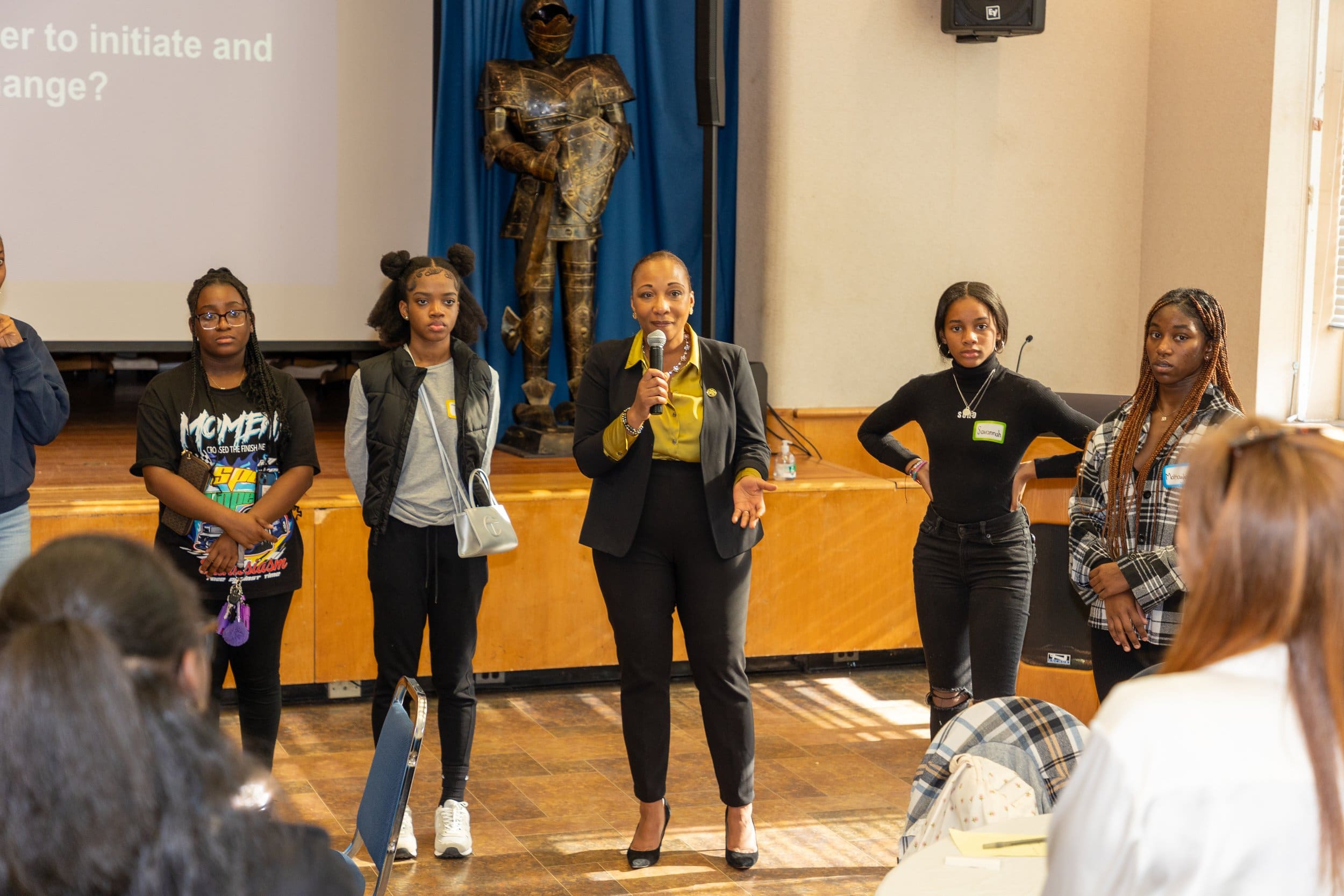 What we learned in those two days of engagement is that our young ladies of color are telling us: let us show up as ourselves; let us speak up for ourselves using our own terminology; let us tell you what the important issues are to us. Give us the space to tell you why we are sometimes disappointed, hurt, and angry. See us. Hear us. Respect us. Let us talk. Support us as we design our own futures. Let us find the solutions to heal our communities and support us in this work. Empower us to lead and, most importantly, love us for who we are.